
Is overconsumption a marketing success or a societal failure?
Updated: Jun 30

The age of buying more
A few years back, shopping was often driven by necessity. People bought products when they needed them and replaced them when they stopped working. Today, consumption is increasingly driven by desire, convenience, and the constant arrival of something new. Whether it is fashion, technology, beauty products, or food delivery services, consumers are exposed to countless messages encouraging them to upgrade, restock, or try the latest trend.
This shift has sparked an important debate. When people buy more than they actually need, is it a sign that marketing has become incredibly effective, or does it point to a deeper societal issue? The answer lies somewhere between the two. Overconsumption is not created by marketing alone, but marketing certainly plays a powerful role in shaping the environment that encourages it.
Why overconsumption looks like a marketing success
From a business perspective, overconsumption can appear to be a remarkable achievement. The primary goal of marketing is to create demand, build brand preference, and drive sales. When consumers make frequent purchases and remain engaged with a brand, marketers often view it as evidence that their strategies are working.
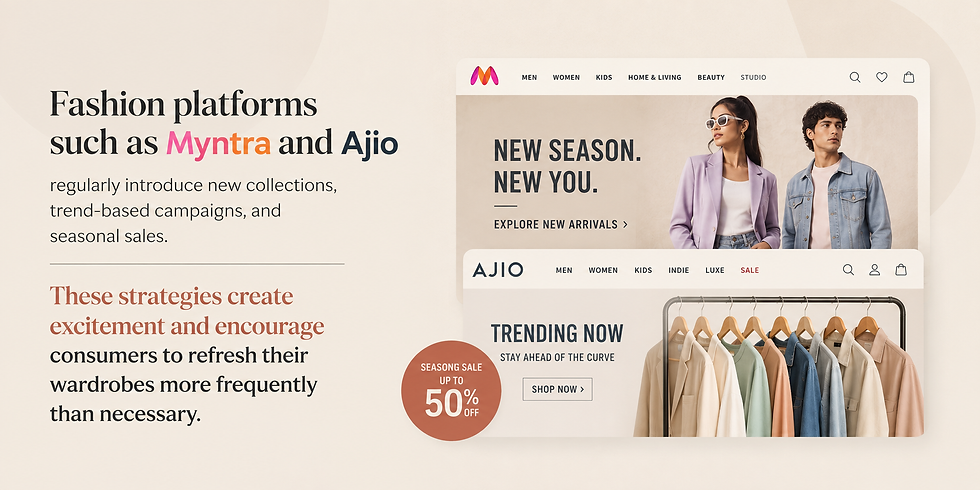
Many successful brands have mastered the art of making products feel desirable rather than merely useful. Fashion platforms such as Myntra and Ajio regularly introduce new collections, trend-based campaigns, and seasonal sales. These strategies create excitement and encourage consumers to refresh their wardrobes more frequently than necessary.
Similarly, the smartphone industry thrives on regular upgrades. Brands such as Samsung and Xiaomi launch new devices every year, often highlighting improvements in camera quality, design, or performance. While innovation is important, many consumers replace functioning devices simply because newer versions are available. In such cases, marketing successfully shifts attention from what consumers already have to what they could have.
The psychology behind buying more than we need

Marketing alone cannot explain overconsumption. If advertisements were the only factor, every campaign would result in massive sales. Instead, successful marketing works because it taps into existing human emotions and motivations.
People often buy products for reasons beyond functionality. Purchases can represent status, self-expression, belonging, or even personal achievement. A pair of sneakers may symbolize a lifestyle. A luxury watch may communicate success. A skincare product may represent self-care and confidence.
Social media has intensified these motivations. Platforms such as Instagram and YouTube have transformed consumption into a visible activity. Influencers showcase products, share recommendations, and create trends that millions of people follow. Consumers are no longer purchasing solely for personal use. They are often participating in a larger cultural conversation where products become symbols of identity and relevance.
This is why limited-edition launches, exclusive drops, and viral products generate such strong reactions. People fear missing out on experiences that others seem to be enjoying. Marketing campaigns often amplify this feeling, making purchases feel urgent and emotionally significant.
The business of making consumption frictionless

One reason overconsumption has become so common is that buying things has never been easier. Earlier, purchasing required effort. Consumers had to travel to stores, compare options, and spend time making decisions. Today, technology has removed many of those barriers.
With quick-commerce platforms such as Myntra, Blinkit, Zepto, and Swiggy Instamart, products can arrive at a customer's doorstep within minutes. E-commerce platforms save payment information, recommend products based on browsing history, and notify users about discounts before they even think about making a purchase.
This convenience is not accidental. It is the result of carefully designed customer experiences aimed at reducing friction. The easier a purchase becomes, the more likely consumers are to buy impulsively.
Research by consulting firm McKinsey has shown that convenience has become one of the strongest drivers of consumer behaviour globally. In many cases, consumers are not necessarily buying because they need something immediately. They are buying because the effort required to make the purchase has become almost negligible.
From a business perspective, this is an achievement in customer experience design. From a societal perspective, it raises questions about whether convenience sometimes encourages consumption that would not have happened otherwise.
What happens when "more" becomes the goal?
The consequences of overconsumption are often discussed in environmental terms, but the impact extends much further.
India generated more than 1.7 million tonnes of electronic waste in 2023, according to government estimates, making it one of the world's largest producers of e-waste. Frequent upgrades of smartphones, laptops, and gadgets contribute significantly to this growing challenge.
The fashion industry presents another example. A growing number of consumers buy clothing for specific occasions, social media content, or short-term trends. As trends move faster, garments are often discarded long before they wear out.
There is also a personal cost. Studies in consumer psychology have repeatedly found that while purchases can create short-term excitement, the effect tends to fade quickly. This phenomenon, often called the "hedonic treadmill," explains why people frequently seek new purchases to recreate the same feeling of satisfaction.
The result is a cycle where consumers own more products than ever before but do not necessarily feel more fulfilled.
So, is it a marketing success or a societal failure?
The truth is that overconsumption is both a marketing success and a societal challenge. Marketing has become exceptionally skilled at understanding human behaviour. It knows how to create desire, build aspiration, and make products feel relevant to our lives. Businesses deserve credit for developing strategies that connect with consumers so effectively.
At the same time, overconsumption reflects something larger than advertising campaigns or sales promotions. It reveals a culture that often associates happiness with ownership, status with possessions, and progress with constant upgrading.
The most successful brands of the future may not be the ones that persuade people to buy the most. They may be the ones that create products people genuinely value, use longer, and recommend because they improve lives rather than simply increase consumption.
Perhaps the real measure of success is not how much we consume, but whether what we consume actually adds meaning, utility, and lasting value to our lives.


Comments