
How the linkedIn algorithm works in 2026
- May 1
- 4 min read
Updated: May 27
LinkedIn is no longer just a networking platform. It functions more like a content ecosystem where every post is evaluated before it earns visibility. If your posts are not reaching people, it is not random. The algorithm is making decisions based on how useful, relevant, and engaging your content appears. The good news is that once you understand how it works, you can work with it instead of guessing.
It starts with a small test audience

Every time you post, LinkedIn does not immediately show it to your entire network. It quietly tests your content with a small group of people first. This group usually includes your recent connections, people who interact with your content often, and users who engage with similar topics.
If this group interacts with your post, LinkedIn takes it as a positive signal and begins to push it further.
For example, imagine you post: “3 mistakes small brands are still making with influencer marketing in 2026.”
If marketing professionals in your network start liking, commenting, or saving the post, LinkedIn assumes the content is valuable and expands its reach to a wider but similar audience. If there is little to no interaction, the post simply stops there.
The first hour can shape everything: Understanding the linkedIn algorithm.

The initial response your post receives plays a major role in how far it travels. LinkedIn closely observes what happens shortly after publishing. But not all engagement is treated equally.
A like is a quick reaction. A comment, on the other hand, shows effort and interest. Shares indicate that someone found your content worth passing on.
For instance:
A post with 20 comments and 30 likes will often perform better than a post with 100 likes and no comments
A thoughtful reply like “I faced this issue too in my first job” carries more weight than a simple emoji
This is why posts that invite discussion tend to perform better. A simple question at the end can make a difference, but it has to feel natural. Instead of asking, “Do you agree?” try asking something specific like, “What is one mistake you made early in your career that taught you the most?”
Why people stopping to read matters
One of the most important signals in 2026 is something called dwell time. It refers to how long someone pauses on your post before scrolling away. If users stop and read, LinkedIn interprets that as interest. This is why the opening line of your post matters so much.
Compare these two openings:
“Content marketing is important for brands today.”
“I posted consistently on LinkedIn for 30 days. Here is what actually changed.”
The second one creates curiosity. It makes people pause, and that pause tells the algorithm your content deserves attention. Once you have their attention, the structure of your post keeps them there. Short paragraphs, clear flow, and simple language make your content easier to read.
Not all content formats are equal
LinkedIn now supports multiple formats, but some naturally perform better because they hold attention longer.
Story-driven text posts continue to do well because they feel personal and relatable. Carousels are effective because users swipe through them, increasing engagement time. Short videos are gaining traction, especially when they are direct and informative.
Imagine you want to share productivity tips.
You could write a long paragraph explaining everything, or you could create a carousel:
Slide 1: “5 productivity habits that actually work”
Slide 2 to 6: Each habit explained simply
The second approach is more likely to keep users engaged, which increases your reach.
Consistency builds recognition

The LinkedIn algorithm pays attention to your posting behavior over time. It favors creators who show up regularly because consistency builds trust with the audience. This does not mean posting every day without purpose. It means showing up with value on a regular basis.
For example, posting twice a week with clear, useful insights about marketing will help LinkedIn understand your niche. Over time, it will start showing your content to people who are interested in that topic.
If you keep switching between unrelated subjects, the algorithm struggles to categorize your content and your reach becomes inconsistent.
Engagement has evolved beyond tricks
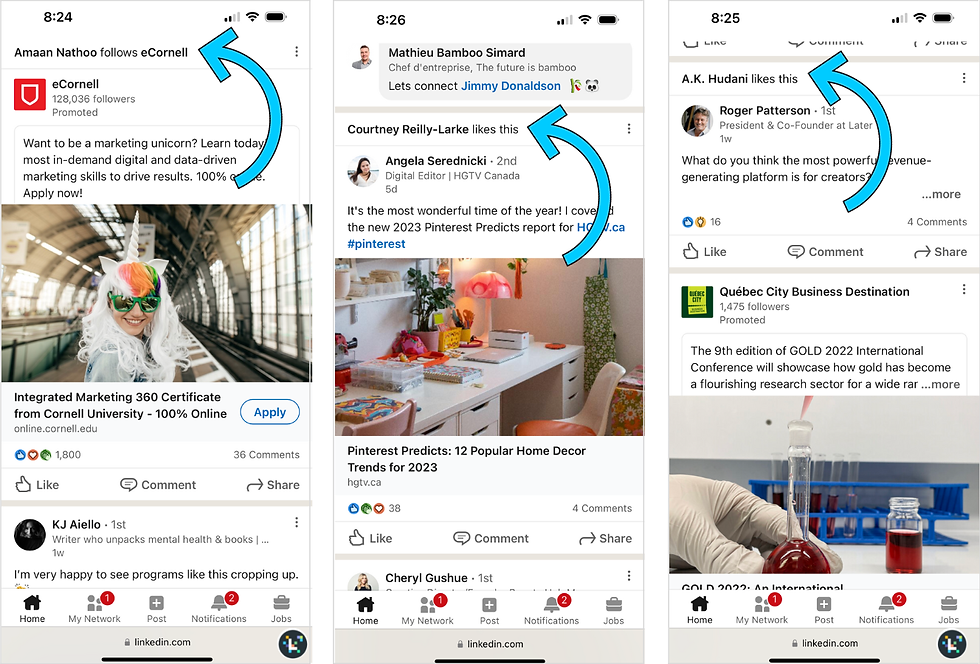
There was a time when simple tactics like “Comment YES if you agree” worked well. In 2026, LinkedIn is much better at identifying low-effort engagement.
What works now is authenticity.
Posts that share real experiences, honest lessons, or unique perspectives tend to perform better because they invite genuine responses. For example: “Comment YES if you agree” feels forced. “What is a lesson your first job taught you the hard way?” feels like a conversation.
The difference is subtle but important.
Your network still matters

Even though the algorithm plays a big role, your network is still a key factor in your reach. If your connections regularly engage with your posts, LinkedIn is more likely to push your content to their networks as well. This creates a ripple effect.
This is why engagement is a two-way process. If you actively comment on other people’s posts, your visibility increases. Over time, more people start recognizing your name and engaging with your content.
Keywords help linkedIn understand you
LinkedIn also uses keywords to understand and categorize your content. When you naturally include relevant terms in your posts, it becomes easier for the platform to show your content to the right audience.
For example, if you’re writing about digital marketing, adding phrases like “content strategy” or “social media trends” helps LinkedIn identify what your post is about. Hashtags still matter, but they’re no longer the main driver, using three to five relevant ones is more than enough.
The real takeaway
The LinkedIn algorithm in 2026 is not designed to limit you. It is designed to filter out noise and highlight content that people actually care about. If you approach LinkedIn as a place to share ideas, start conversations, and offer value, the algorithm works in your favor.
Instead of trying to beat the system, focus on understanding your audience. Write like you are speaking to a real person. Share something useful, something honest, or something that makes people think.
Because at the end of the day, the algorithm is only doing one thing. It is paying attention to what people choose to engage with.


Comments