
How Veeba rewrote the rules of sauces and spreads in India
Updated: Mar 24
The Inception
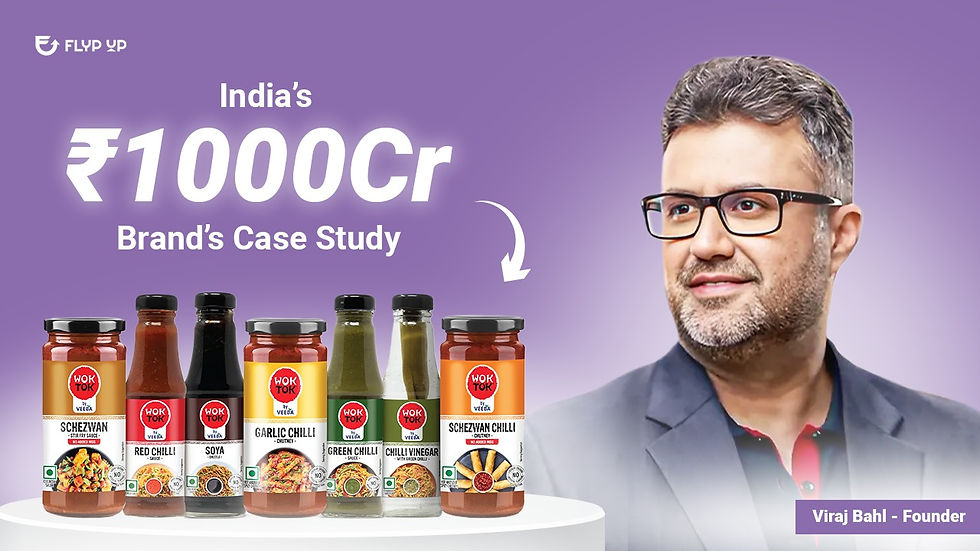
Veeba’s journey began in 2013 when Viraj Bahl, a second-generation entrepreneur, hit rock bottom. After his chain of restaurants failed, Bahl sold his house and invested in a new venture focused on producing high-quality sauces and condiments. He deliberately built Veeba as a professional, non-family-owned company and initially chose to serve food businesses, such as Domino’s and KFC, instead of rushing into retail. As Bahl put it, “We didn’t want to be a me-too product.” Veeba set out to offer innovative flavours and superior quality compared to traditional local brands. This patient B2B-first approach helped the brand build credibility and funded its eventual entry into the retail market.
What’s in a Name?
The name Veeba itself tells the story of the brand’s roots. Viraj Bahl named the company after his mother, Vibha, with “Veeba” being her affectionate nickname. This personal touch reflects the brand’s homegrown and caring image. Over time, Veeba’s slogans have reinforced this family-friendly and fun spirit. According to Bahl, the brand shifted to an all-India English slogan so it could connect with audiences across the country. In essence, the name and taglines highlight warmth, creativity, and the idea that Veeba products add a sense of joy and adventure to everyday meals.
Branding and Philosophy of Veeba
From the very beginning, Veeba’s brand promise has focused on offering better-for-you condiment experiences. Its marketing consistently highlights quality and innovation. Veeba offers products with no added preservatives, zero trans fat, and even no onion or no garlic options, catering to Jain & health-conscious consumers.
The brand uses friendly and upbeat messaging, especially through video ads and social media, that focuses on cooking inspiration rather than only talking about product features. In practice, this means Veeba emphasizes real, high-quality ingredients across its range, from low-fat eggless mayonnaises to nut-based peanut butters. This approach allows parents and food lovers to feel confident about using the products in their everyday meals.
The result is a brand identity built on innovation through new flavours and inclusivity through healthier variants, rather than relying on tradition or nostalgia.
Packaging and Product Design

Veeba’s products stand out on retail shelves because of their distinctive design and everyday practicality. The bottles and jars feature bright labels and easy-to-hold shapes that feel modern and convenient. Veeba was among the early brands to introduce ergonomic squeeze bottles with flip-top caps, replacing messy glass jars and awkward pouches commonly used by competitors. This simple change made cooking cleaner and more convenient at home.
In 2023, Veeba refreshed its packaging with a clearer visual identity. The new designs highlight ingredients more transparently and include QR codes that lead to creative recipes. This reinforces the brand’s focus on openness and inspiration. Clear labels that point out claims such as vegan-friendly or gluten-free help shoppers instantly recognise the brand and understand its promise. Packaging plays a key role in communicating Veeba’s philosophy at a glance.
A World of Flavours
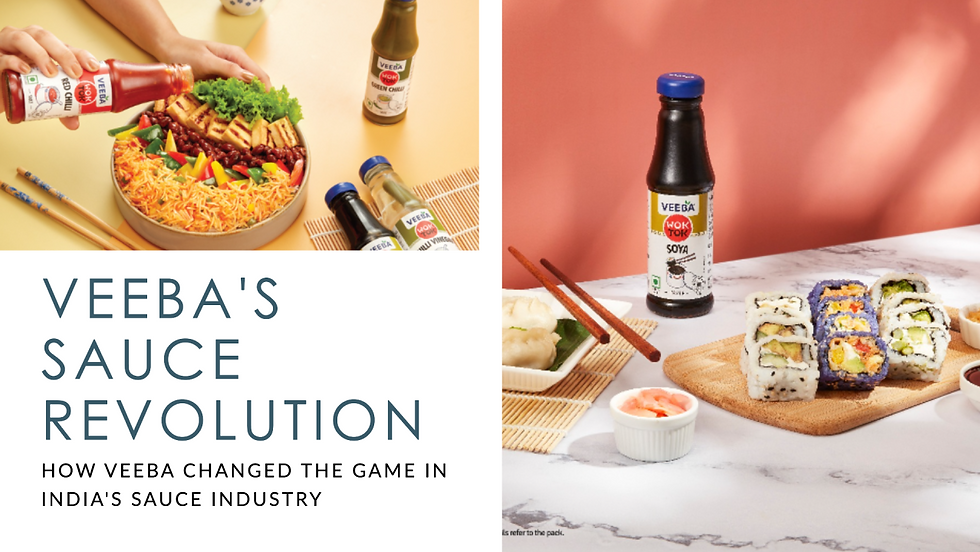
Veeba’s range goes far beyond basic tomato ketchup. Its sauces and dressings cover a wide spectrum of global flavours, from classic ketchup and mustard to Southwest Chipotle, Thai Sweet Chilli, and the Indian-inspired WokTok range of Chinese-style noodles and sauces.
Today, Veeba offers hundreds of sauces, condiments, and dressings. Founder Viraj Bahl has often shared that the brand was built to bring global tastes into Indian kitchens, and the product portfolio clearly reflects this mission. Some of the brand’s best-selling products include eggless mayonnaise, tangy tandoori mayo, and a chef-style tomato ketchup. These products are carefully designed to suit Indian palates while introducing new and exciting flavour combinations.
In doing so, Veeba expanded the idea of Indian sauces from just ketchup and chutney to a much broader world of international and fusion flavours.
Creamy Spreads and Butters

Veeba did not stop at sauces alone. It also reshaped the market for spreads and nut butters. The brand introduced sandwich spreads such as green chutney mayo and cheese chilli spread, along with creamy nut butters made from peanuts and almonds. It later expanded into fruit jams and sweet toppings as well.
These products are positioned as tasty yet healthier upgrades. For example, Veeba’s peanut butter contains no added hydrogenated oil, and its sandwich spreads are made with real vegetables. By offering premium-quality products at accessible prices, Veeba successfully filled a gourmet gap in the Indian market.

By the late 2020s, Veeba’s portfolio had grown to more than 330 products. This includes not only ketchup and mayonnaise, but also peanut butter, jams, dips, and ready-to-cook sauce kits. Such a wide portfolio ensures that Veeba products occupy pantry shelves far beyond the usual condiment corner.
Go-To-Market Strategy
Veeba’s founders often describe their approach as a blue ocean strategy. Instead of competing head-on with established giants like Kissan or Heinz in retail, Veeba chose a smarter and less crowded route by entering the foodservice space first. The idea was simple but bold: win the trust of large restaurant chains before approaching consumers directly.
Cracking Domino’s became a defining moment in Veeba’s journey. At the time, Domino’s was looking for a reliable Indian partner who could deliver consistent quality at scale while matching global taste standards. Veeba invested heavily in R&D, testing multiple formulations to meet Domino’s exact requirements for taste, texture, shelf life, and hygiene. After several trials and improvements, Veeba secured a large initial order, marking its entry into the big leagues.
This partnership was more than just a business win. Domino’s endorsement gave Veeba instant credibility. If a national pizza chain trusted Veeba’s sauces, it signaled quality and reliability to the entire food industry. Soon after, other major chains such as Pizza Hut, Taco Bell, KFC, and Burger King followed, helping Veeba build volume, operational strength, and a strong backend before entering retail.
Veeba’s hero product during this phase was its mayonnaise, especially the eggless variant. At a time when eggless mayo options were limited or inconsistent in quality, Veeba created a product that matched international standards while appealing to Indian preferences. This mayonnaise became a staple in restaurant kitchens and later emerged as one of Veeba’s strongest retail offerings. Its success helped the brand carve a clear identity as a mayonnaise expert rather than a generic sauce brand.

Once the foodservice foundation was strong, Veeba entered the retail market around 2015. By then, the brand had already perfected its formulations and supply chain. Consumers who had unknowingly tasted Veeba’s mayo in restaurant meals were more willing to trust the brand on store shelves. In retail, Veeba continued to differentiate itself by targeting food-loving homemakers and young professionals who wanted restaurant-style flavours at home.
Instead of relying only on traditional advertising, Veeba focused on storytelling through digital content and recipe-based campaigns such as “Aaj Kya Khaoge.” Strategic associations with platforms like MasterChef India and major cricket tournaments further strengthened its connection with cooking, experimentation, and everyday indulgence. This phased and well-thought-out go-to-market strategy helped Veeba grow steadily while making competition largely irrelevant.
Distribution and Reach

Today, Veeba is a truly national brand. Unlike many startups that limit themselves to online platforms or metro cities, Veeba built a wide distribution network. Its products are available in more than 700 cities across India, ranging from metros like Delhi and Bengaluru to tier-two towns such as Vellore and Ludhiana.
Around 150,000 retail outlets stock Veeba sauces and spreads, with nearly 70 percent of sales coming from neighbourhood kirana stores. Only a small share of sales now comes from the brand’s original B2B channel. This strong presence across traditional trade, modern retail, and online platforms has played a major role in Veeba’s growth and accessibility.
Beyond India, Veeba has also begun establishing an international footprint. The brand exports its products to multiple countries, particularly in South Asia, the Middle East, and select global markets, catering to Indian diaspora and international consumers seeking Indian and global-flavour condiments. While exports currently form a smaller share of total revenue, they signal Veeba’s ambition to evolve into a global sauces and condiments brand.
This combination of deep domestic penetration and growing international distribution has played a crucial role in Veeba’s sustained growth and strong brand recall.
Marketing and Growth
Veeba’s youthful and vibrant marketing further helped it rewrite category norms. The brand built an active digital community across platforms like Instagram, Facebook, and YouTube, where it regularly shares recipes and cooking hacks. Collaborations with chefs and food influencers helped reinforce its restaurant-quality positioning.
Veeba also continued expanding its product range to keep consumers engaged. Alongside sauces and spreads, it introduced peanut butter and the WokTok range of stir-fry sauces, ensuring there was always something new for shoppers to explore.
Veeba’s meaningful growth began around 2015–16, after it made a deliberate shift from being only a foodservice supplier to entering the retail market. Until then, the company was focused primarily on B2B clients such as Domino’s, Pizza Hut, KFC, and other QSR chains. This phase helped Veeba perfect its recipes at scale, build manufacturing capability, and establish strong credibility, but revenues were still modest and largely backend-driven.
The first major inflection point came when Veeba entered retail with its hero product: eggless mayonnaise. At the time, mayonnaise was still a niche category in Indian homes, and most options were either imported, egg-based, or positioned as premium. Veeba identified a gap and introduced an eggless, affordable, Indian-palate-friendly mayo, which quickly became its flagship product. This helped Veeba create a new consumption habit rather than compete head-on in ketchup.
From 2017 to 2019, growth accelerated as:
The mayonnaise category expanded rapidly in India
Veeba extended the same format into flavored mayos and sandwich spreads
Distribution widened beyond metros into tier-2 and tier-3 cities
The second growth surge came post-2020. During and after the pandemic, more Indians began cooking at home and experimenting with restaurant-style food. Veeba benefited directly from this shift, as its products were positioned exactly for home experimentation. Its digital-first content, recipe-led marketing, and influencer collaborations further strengthened brand recall.
Between FY22 and FY23, Veeba saw one of its strongest growth phases, with revenues jumping from about ₹542 crore to ₹811 crore, driven by:
Deeper penetration into general trade (kirana stores)
Expansion into new categories like peanut butter, dips, and WokTok stir-fry sauces
Increased brand visibility through platforms like MasterChef India and major sports events
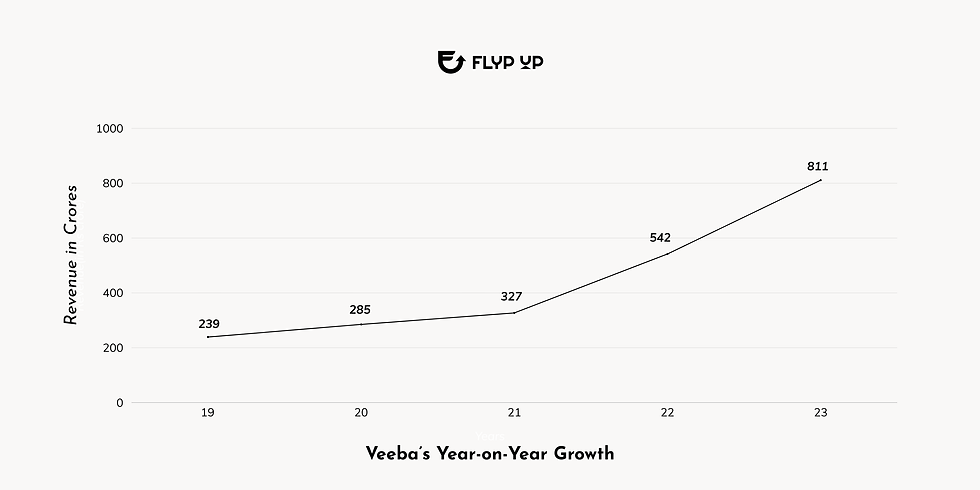
In summary, Veeba’s growth was not overnight. It followed a clear sequence:
2013–2015: Foundation building through B2B and QSR partnerships
2016–2018: Retail entry powered by a strong hero product (eggless mayo)
2019–2021: Portfolio expansion and wider distribution
2022 onwards: Scale, brand maturity, and category leadership
This combination of timing, product innovation, and a phased go-to-market strategy explains why Veeba’s growth curve steepened sharply after its early years and continues to rise.
By FY2023, Veeba’s annual revenue reached approximately ₹811 crore, with expectations of crossing ₹1,000 crore soon after. The company attracted investments from firms such as DSG Consumer Partners and Verlinvest to support expansion. From almost no sales in 2014 to becoming one of India’s largest homegrown sauce brands, Veeba’s growth story stands out. It has also earned recognition as a strong workplace and an innovative challenger in the FMCG space.
The Wrap
Veeba’s journey shows how a young brand can disrupt a crowded market by thinking differently. Instead of following conventional paths, it combined product innovation, emotionally relatable branding, and smart distribution. The result is a brand that has rewritten the rules of sauces and spreads in India.
Today, Veeba’s bright bottles are instantly recognisable on store shelves, reflecting strong brand recall for a company just over a decade old. By blending global flavours with local preferences and telling engaging food stories, Veeba proved that even everyday products like ketchup and mayonnaise can be reimagined. It remains a powerful case study in how passion, persistence, and creativity can reshape an entire category.



Comments